Thursday, July 31, 2008

THIS LITTLE FIGGY ALL GONE


I have a sweet and generous sister in law. We were talking about the fig tree at her Mama's and how she would make fig preserves every year. She would call and invite me over as soon as she made them. She always left some warm in the pot for us, which we would eat right away with nice hot, buttered biscuits. She made the best biscuits in the world. Then the rest she put in jars. I would always take some home with me and I remember it as one of the special times I spent with her.

I have a fig tree but birds got mine this year. Doris's husband, Larry set out to find some for me. Thank you Larry, I appreciate that. Then she made me all these lovely jars of figs. I have two, large jars of preserved, whole figs, three jars of regular fig preserves and three Strawberry, fig preserves. I have never tasted Strawberry figs before. They are absolutely delicious. I made biscuits and sat down with a jar and a big smile. Then Billy came home and finished off the pan of bisquits. We love them. Thanks Doris. (((hugs))) You are definitely on our Christmas list. : ) Does anyone else make Strawberry, fig preserves?

Wednesday, July 30, 2008

JAPANESE GARDEN


Japanese gardens are a big part of the Japanese culture. These gardens don't actually come from Japan, though. The idea of the garden comes from China. After China started to design gardens, Korea and Japan liked the idea, so they took the basic layout of the Chinese gardens and began creating gardens in their own countries.

The gardens use many different kinds of trees and bushes which they keep trimmed very neatly. The shapes that are made of the plants are usually rounded.

In the center of the garden, there is normally a stone. These stones are decorated in many ways, either with a design or the family crest.

One of the things you notice is that flowering plants are scarce or nonexistent in Japanese garden design. Instead you see dry gravel stream beds or sand swept into patterns and large rocks and boulders are used to tell a story. The heart of all Japanese garden design is symbolism and storytelling. This is done with plants and other elements of nature and not so much the use of colorful flowers.

Equally important to Japanese garden design are the use of water, and more specifically the use of running water, which symbolizes passing time or life.

My sister in law has been talking about something along this line for her yard. That is why I got interested in it. she is very creative so I can't wait to see what she comes up with. If you would like to know more, click on this link,,,JAPANESE GARDEN IDEAS

Tuesday, July 29, 2008

POISONOUS PLANTS

OLEANDER


Recently I wrote about a plant called Yesterday-Today- Tomorrow. I found out it was poisonous and decided against putting it in my yard. I also decided to do some research on other plants I like to see how they stack up in the poison department.

There are many plants that cause an adverse reaction when they are eaten or their sap contacts skin. A partial list of common outdoor plants includes angel trumpet, oleander, poinsettia, Castor bean, autumn crocus, delphinium, bleeding heart, and lily of the valley. Some common indoor plants that are toxic are dieffenbachia, caladium and various species of philodendron.

Some of these I knew and some I didn't. I found out about Oleanders when we wanted to plant them a few years back. They are planted down the middle of one of our highways, here on the Coast and look so pretty. Billy loves them but I just thought it was too big a chance to take with little animals running all over. This was when we lived in the country and not only our little four legged babies but the wildlife could have been at risk.

The University of California provides an extensive list on their Web site.

If you look up the University in your state, you will find info for your local plants. The library of Congress also provides many booklets on this subject. Some you will have to pay for though.

Another useful Web site is one maintained by the ASPCA.
ASPCA SITE

Here is a list of poisonous plants from the South.

POISONOUS PLANTS OF THE SOUTHERN UNITED STATES

But keep in mind that we all do plant things in our yard or garden, with some part of it being poison, like the tomato plant...the fruit are fine but the plant itself can be dangerous if ingested. So take what you can use and throw out the rest as my Mama would say. I just like to know the ones that are dangerous so I can make an educated decision on whether on not to grow them.

Monday, July 28, 2008

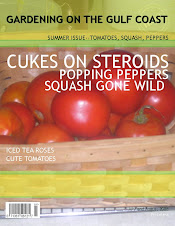
Design your own magazine cover

Just scroll down below my blog list and click on the picture. Fun thing to do.

Sunday, July 27, 2008

WISHING WELL PLANTER


Plans for building the wishing well planter in the picture. I think I am goimg do this. I am looking at a few and this one seems like something I might be able to do. Can't you just see this in your favorite color, filled with plants?

PLANS FOR BUILDING YOUR OWN

Friday, July 25, 2008

RAISING CANE


I planted Cane in this pot at least ten years ago. I have never watered it, fed it or even praised it and yet it grows and grows. The pot is really small now for it's size but I figure it is doing so good, why bother it. Billy said it was cracking on the side a little, so I will just wait and let it come out when it is ready.

I have no idea what it is. I just call it cane. It starts out white in early Spring and then turns to a pretty stripe by Summer. It dies back after the first freeze and comes back every Spring. And like most of my plants, it never gets prettied up. The reason this one doesn't, has to do with the fire ants who made their bed in there. I know I should put poison and get rid of them but what if they decided to go somewhere else then. At least I know where they are and they seem happy and have hung out their "Home Sweet Home" sign. I think they keep the soil aerated. I am of the school that if it isn't broke, don't fix it, so I leave it alone. And every year,,there it is in all it's glory.

I planted blanket flowers around it and a spiller over the edge, which is long gone now, when it was a much smaller plant. It is a thriller, filler, spiller, gone hay wire. LOL

Thursday, July 24, 2008

BETTER HOMES AND GARDEN


Look what I found on the Better Homes and Garden website. I know most of you probably know about this site or may even get the magazine but have you looked at the site lately. They have a lot of things to spike your interest. I love this idea in the photo. Find a wire wastebasket of preferred height at a home store. Lightly line it with peat moss, then fill the remaining area with potting soil. Top it off with your desired plants. Here, white delphiniums look great next to a doorway.

Check out these quick videos from Better Homes And Gardens too. Starting with, "make your own stepping stones"...hanging baskets, vine suupports, etc. Each one is about a minute and a half. I think you will enjoy them.

Mini videos